
Throttlecast · Episode 9
David Middleton: From a Brooklyn Bus Stop to Race Engineer at the Nürburgring
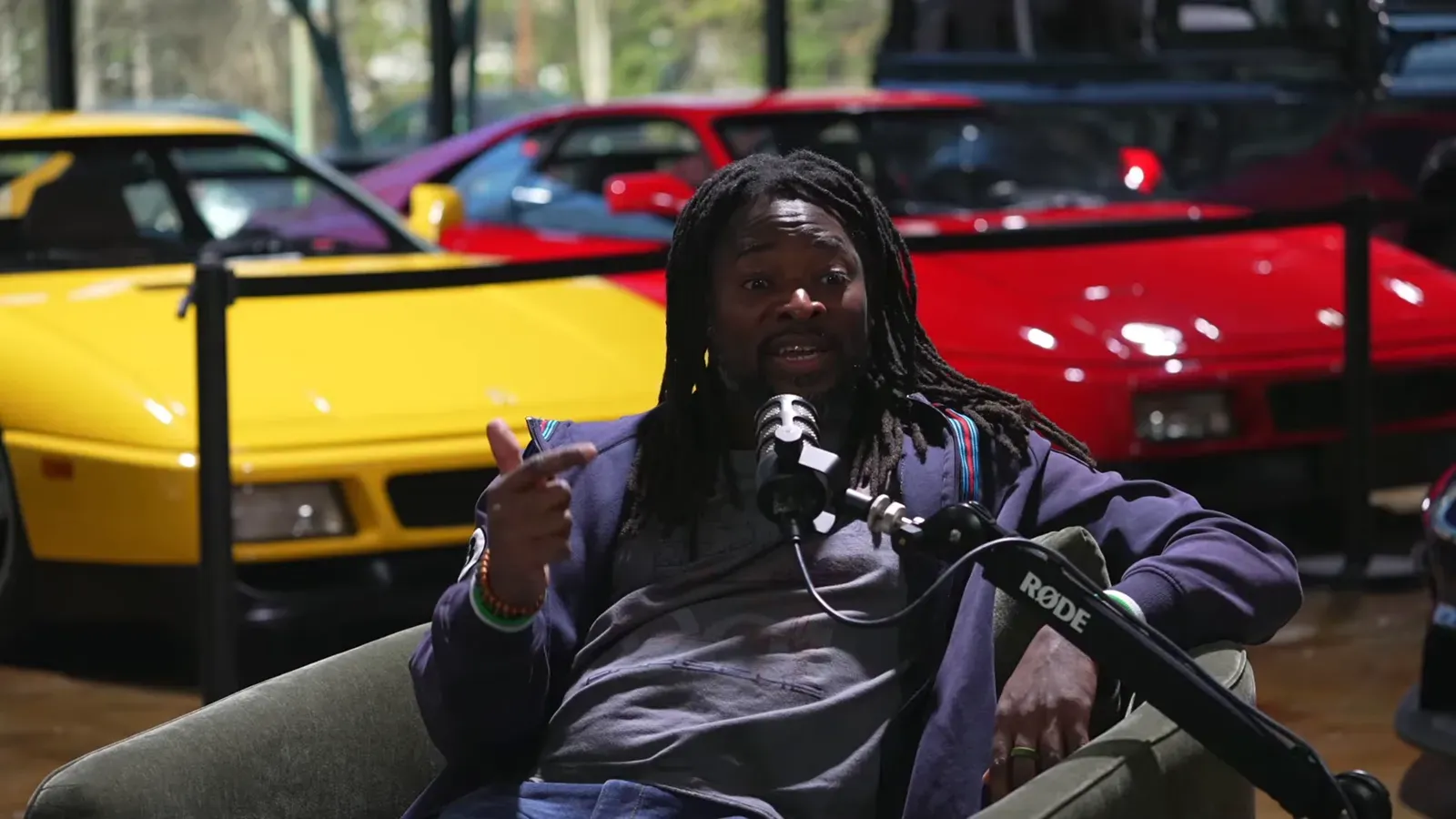
Mar 5, 2026David Middleton grew up in Brooklyn, the son of two educators, in a family where nobody worked on cars. He still made it to Germany, developed engine control units at Bosch Engineering, and spent three seasons as a race engineer at the Nürburgring. Today he runs a company that teaches kids science and engineering through sim racing.

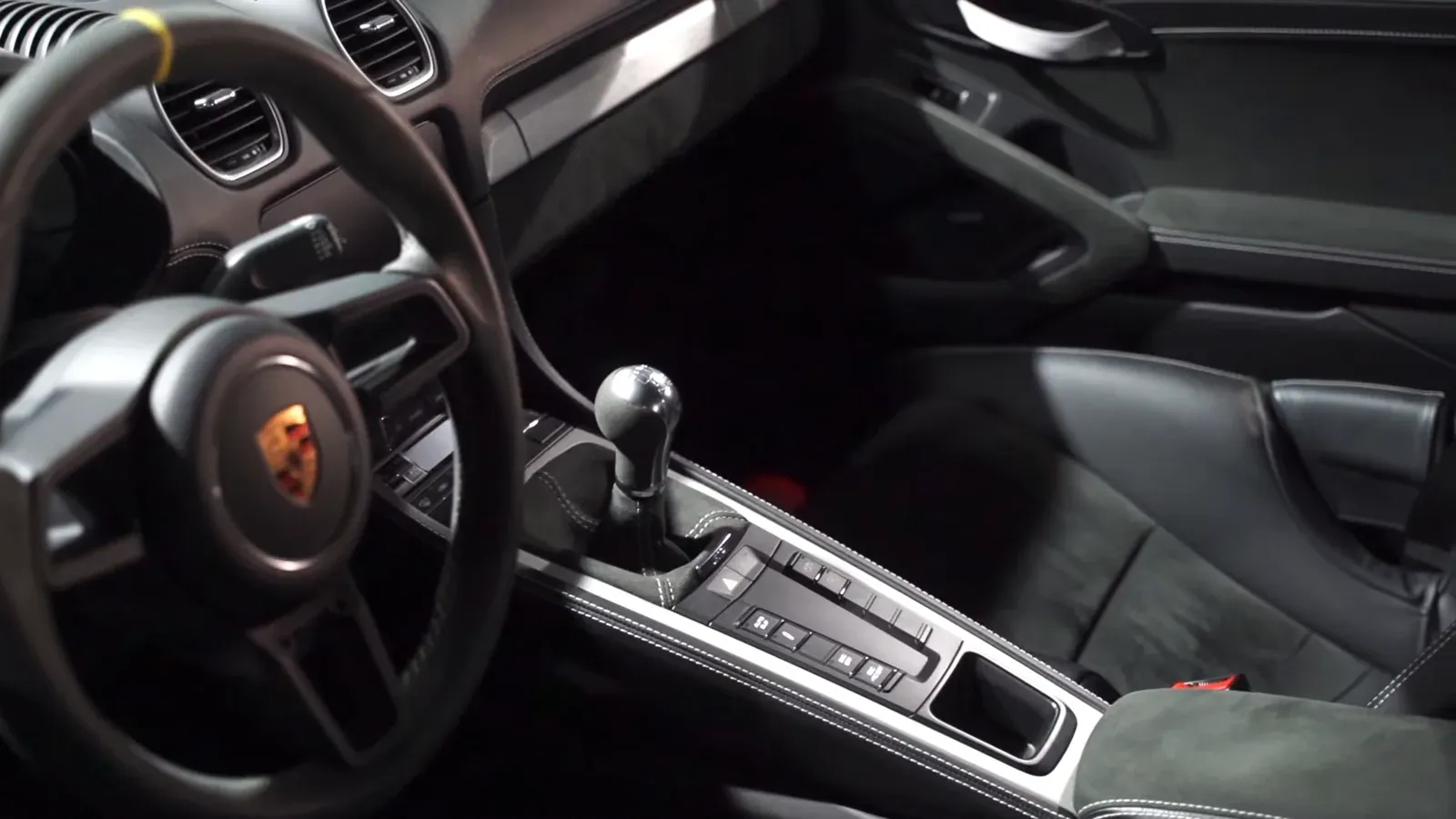
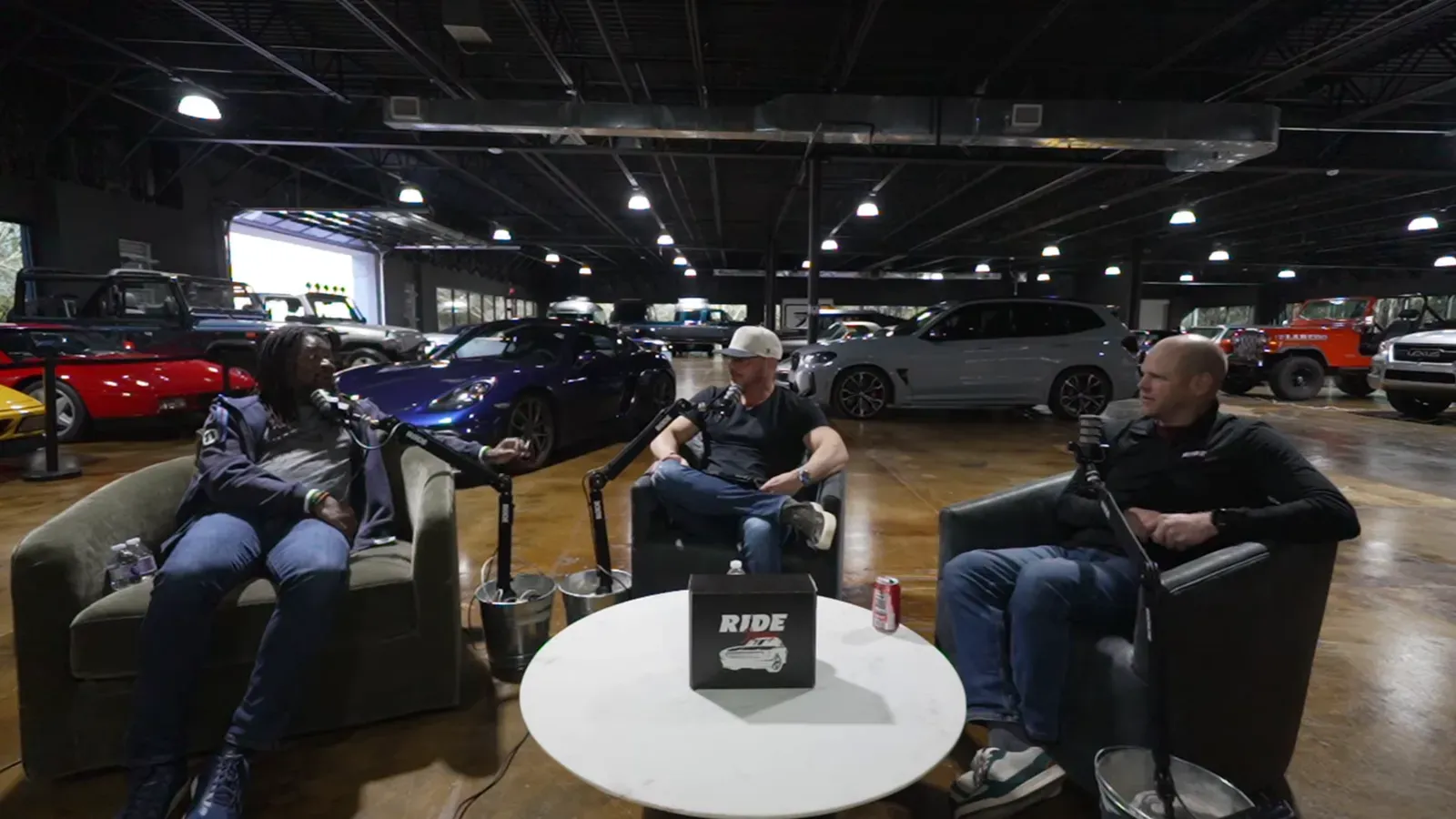
Grant Brewer and Dave Codrea sat down with David at The Ride Lounge in Peachtree Corners. He drove in with his 2023 Porsche 718 GT4, a manual, and the story of how he bought it is the best one in the episode.
A bus stop kid who learned cars by ear
New York kids ride the public bus to school, and David spent a lot of time at bus stops. He learned cars by sound and shape. A red 944 and a red E30 325e in his neighborhood started it.
His dad’s first car was a pea-green Ford Maverick bought from someone at church. David asked him why he didn’t get a BMW. His parents wouldn’t pay for car magazines, so he bought Spree candy with his allowance, sorted it by color, and sold it at school. The profit went to BMW magazines and MotorTrend. “If people can do these things, then I can,” he says.
Physics, a phone call, and a move to Germany
When his college advisor asked what he wanted to do, David said research and development of engines at Porsche. There was no plan for that. His best grades were in physics, so he studied physics.
After graduation he called BMW and Audi in the US and said he wanted to develop engines. Both gave him the same answer: that work happens in Germany. He said he would go to Germany, and the line went quiet.
He saved money working about a year and a half at a friend’s software startup in Boston, then moved to Germany with maybe $2,000 and no German. The money went to an intensive language school. He taught English, tutored math, and took his resume to every car show. At the IAA he talked his way into a meeting with AC Schnitzer. The answer was no. The company had six engineers, and a foreigner who needed training would cost it money. That rejection sent him back to school.
Clemson, Esslingen, and Bosch Engineering
At Clemson, he got a call on the tennis court one day. Two visitors from Esslingen University were recruiting Americans for an exchange in their automotive program. They asked him questions in German, he answered in German, and one of them said he didn’t need to see his grades. The program took him to Weissach and the Mercedes test track.
After Clemson he applied to BMW, Porsche, and the big suppliers. A friend told him he didn’t understand what Bosch Engineering really did. After four trips to Germany, he got a job there, north of Stuttgart. He spent four and a half years developing electronic control units for diesel engines. Jaguar Land Rover was his main client, so he worked on the XE, XJ, XK, and nearly every Range Rover and Range Rover Sport. After Bosch he spent a short stint with the AMG group, then worked for Dallara.
How David Middleton talked his way onto a Nürburgring team
The Nürburgring came through karting. David joined a company karting group, was terrible, and started practicing alone on weekends. A group of French colleagues found him there and invited him to the ring. He walked most of the track during his first 24-hour race with his things in a plastic bag. Standing at Brünnchen, feeling the cars come through, he knew he had to be part of it.
With no car of his own, he took his helmet to track days and asked strangers for rides. Then he walked the garages during VLN races, speaking German, telling teams he was a Bosch engineer who wanted to be a race engineer. Most of them laughed. One said yes.
He spent three seasons with that team, mostly on a Scirocco R in the SP3T class, a car never sold in the US. The team did its own engine mapping and built its own traction control system, which he helped develop. In 2014 he worked Le Mans, then the Nürburgring 24 the following weekend. He says he’ll never do that again.
“The hope of the block”
In the paddock, David rarely saw people who looked like him, and rarely saw other Americans. Back in Brooklyn his friends called him German Dave. Whenever he sent home photos of a GT-R or a 911, one friend’s brother passed them around the neighborhood. He told David he was “the hope of the block.”
David didn’t accept that there should be only one. With his wife’s support, he started bringing kids from military families stationed in Germany to VLN races, and paid for tickets when a family couldn’t. He sat the kids in the car before the race and showed them live data on his laptop. When they said they could never be drivers, he told them they could be engineers, mechanics, technicians, photographers, or team owners.
Sim racing that teaches thermodynamics
Back in the US, the racing jobs David applied for didn’t open up, so he built his own company, combining sim racing with STEM education. As a race engineer, he knew the sims were close to the real thing.
He wrote the curriculum himself, covering aerospace principles, thermodynamics, and electromagnetics. It runs on a three-day cycle: learn the concept and work the equation, do a sim task built on it, then take an open track day to set up the car for an end-of-year race. Students work as a race team, with a race engineer, a tire engineer, and an aerodynamicist.
His favorite example is a 12-year-old karter who hates math. Ask him what he does with tire pressures on a hot Atlanta summer day, then in January, and he explains it perfectly. He has been doing thermodynamics for four years without knowing it. “If we couldn’t bring them to the racetrack, let’s bring the racetrack to them,” David says.
Family comes first now. He is a widowed father of three girls. His late wife was a huge supporter of his dream, and he wants to carry that forward.
The manual GT4 and a drive with his dad
After renting a GT4 RS to drive the Grossglockner in Austria, David came home knowing he needed a Porsche again. He found a 2023 GT4 through the Porsche Club of America marketplace. The seller nearly sold it to buyers who didn’t plan to drive it, then called David back and asked if he would.
David told no one. He asked his dad to fly to San Francisco to help with a business deal, and the seller picked them up posing as a real estate agent. At the house, his dad saw two Porsches. David reminded him that at nine he had begged to learn to drive a manual because one day he would own a manual Porsche. His dad teared up. They spent three days driving Big Sur and down to Monterey to watch Ferrari Challenge.
Rapid fire
- Air-cooled or water-cooled: air-cooled.
- GT3 RS or Carrera GT: Carrera GT.
- The trend he’d erase: cars getting too soft in the name of luxury.
- The one Porsche every enthusiast should drive: the 997 GT3 RS 4.0, for its manual gearbox.
His daughters love Porsche. They have told classmates that if the engine isn’t in the middle or the rear, it isn’t a real Porsche, which earned him a talk with the principal. When one of them guessed he would never let her touch an expensive car, he told her the opposite. “If I buy my Porsche and I never let you drive it or I never let you sit in it, then I failed.”
Watch the full episode
The full conversation with David Middleton is above and on YouTube, including why he calls Porsche a scalpel.
Throttlecast is recorded at The Ride Lounge in Peachtree Corners, a car club in Atlanta built on the idea David closed with: cars are meant to be shared and passed down. Members bring their families to drives, dinners, and nights on the lounge floor. See what’s coming up on the events calendar.